
Last updated November 22, 2026
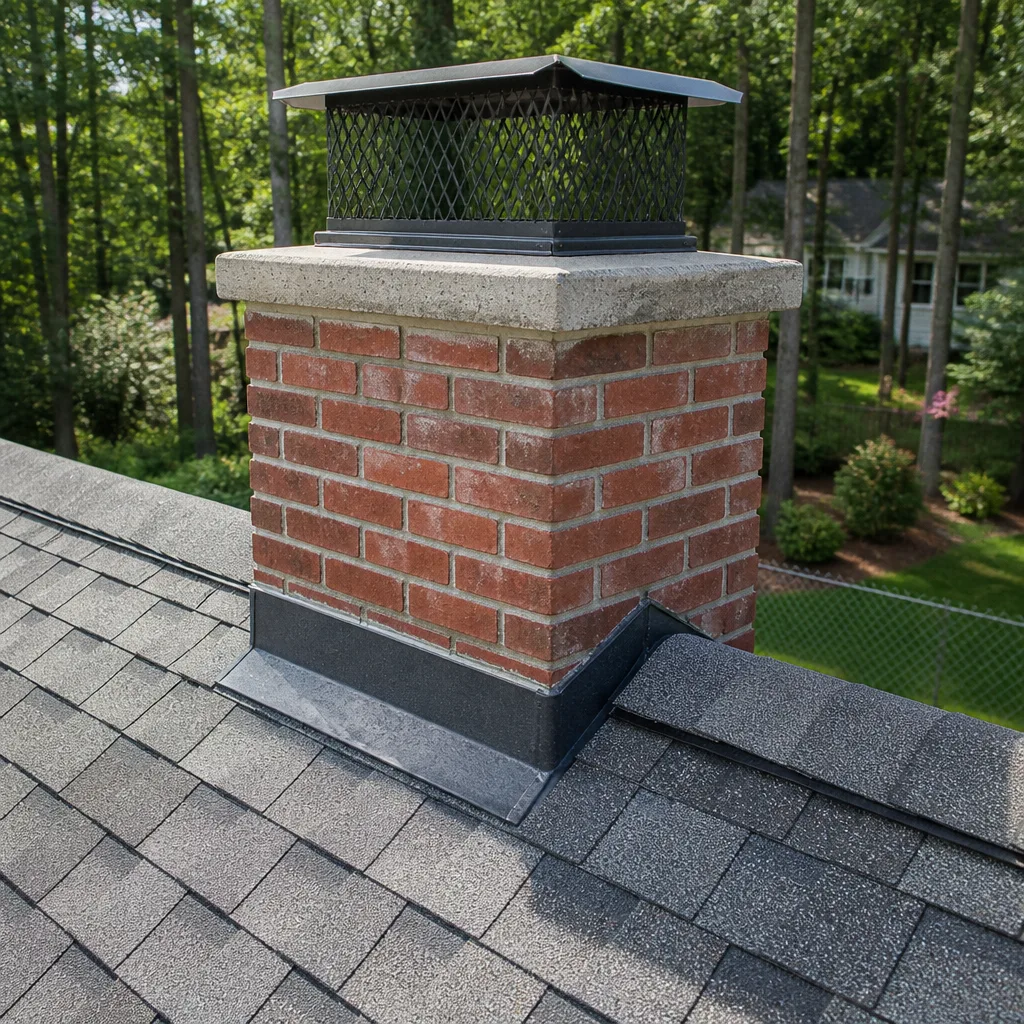 Sweep & inspection
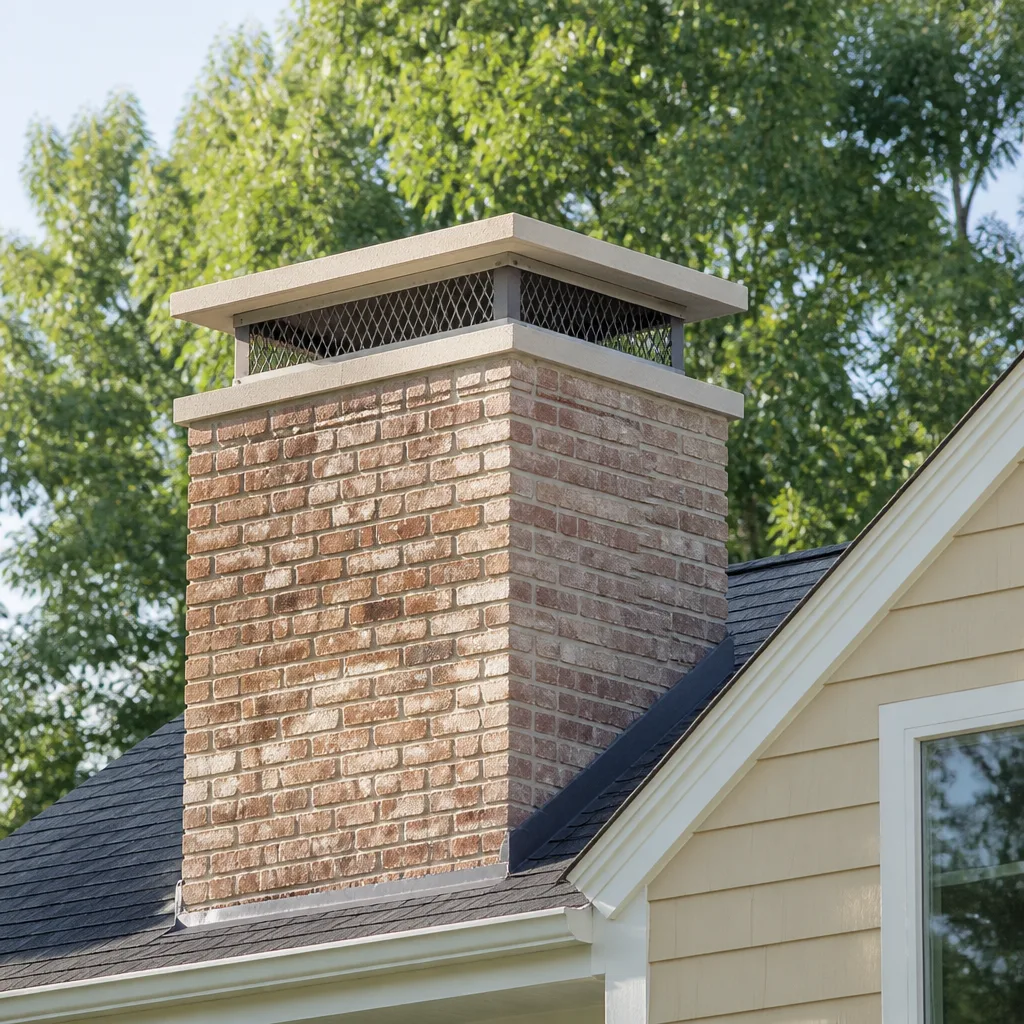 Caps & crowns
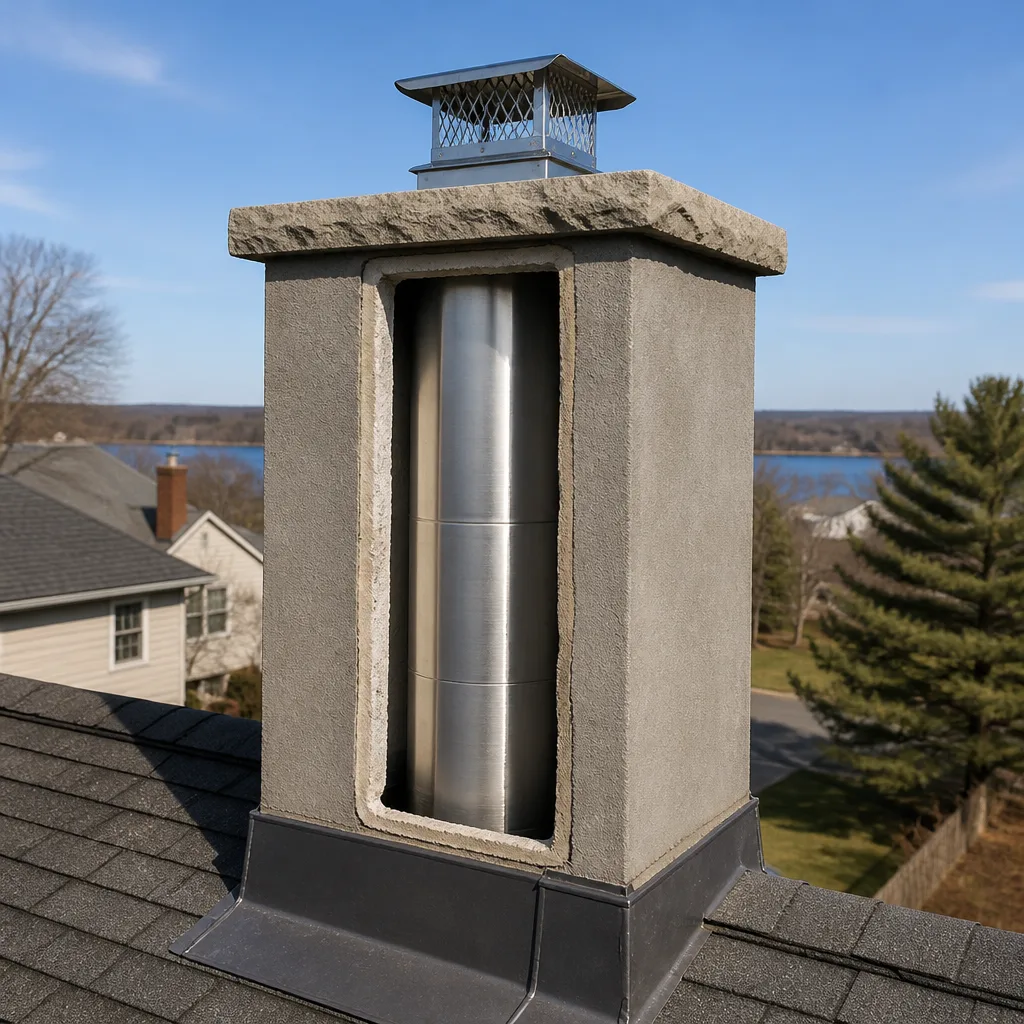 Flue relining
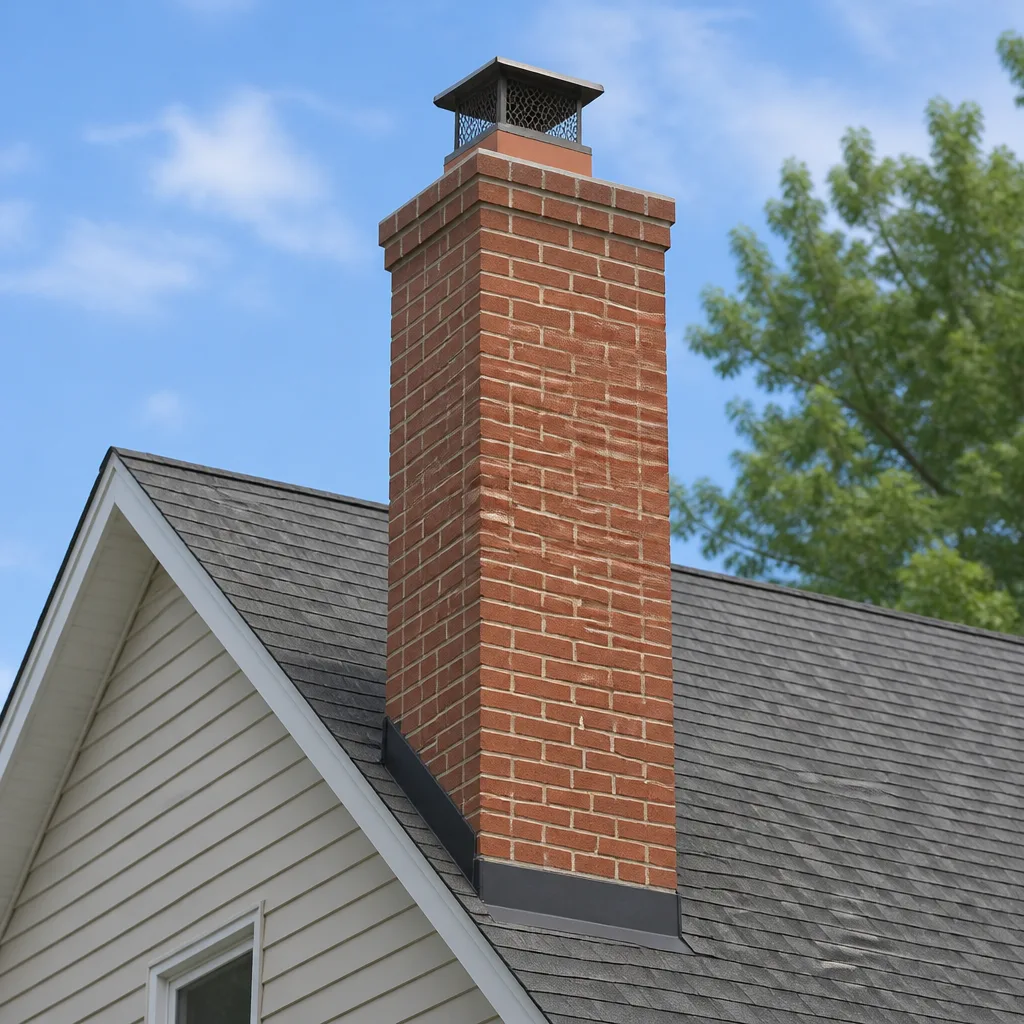 Masonry repair
 Gas fireplace service
Level 1 sweep and inspection to the NFPA 211 annual standard - flue, crown, cap, and flashing checked and photographed
Chimney sweep logs do not sweep chimneys. They loosen some creosote - which then falls where a brush and vacuum still have to collect it.
Chimney Sweep Troubleshooting in Bushwick: Common Problems and How to Fix Them
A smoky living room isn’t a draft problem. We hear that diagnosis constantly, and it’s usually wrong. Smoke spilling into a room has at least six distinct causes, and treating the wrong one burns money on fixes that never hold. The same logic applies to a flue that smells like a campfire in July, or white powder blooming across the bricks. Each symptom points to a specific defect. This guide walks Bushwick homeowners through the diagnostic side of chimney troubleshooting: how to read what your chimney is telling you, which problems you can safely monitor, and which ones need a proper inspection before you light another fire. No checklists for their own sake. Just the reasoning a technician uses when you call one.
Quick Answer
Most chimney problems in Bushwick trace back to a handful of predictable defects: cracked clay tile liners in aging rowhouse flues, moisture intruding through a failed crown or missing cap, and creosote buildup from burning habits that don’t match the flue’s design. A Level 2 inspection under NFPA 211 standards identifies which of these you’re dealing with before you spend money on repairs. If a “fixed” problem keeps returning, the real cause is structural, and another sweep won’t solve it.
Styles & brands we work with
- Sweep & inspection
- Caps & crowns
- Flue relining
- Masonry repair
- Gas fireplace service
Table of Contents
- Symptom-to-Defect Mapping: What Your Chimney Is Telling You
- Why Bushwick’s Pre-War Rowhouses Share Common Chimney Failures
- What You Can Monitor vs. What Needs a Level 2 Inspection
- The Flashlight-and-Mirror Test: Liner Cracking vs. Blockage
- Smoke Spillback and Slow Draft: Six Causes, One Diagnosis
- Efflorescence, Staining, and the Moisture Problem Behind Both
- When a “Fixed” Problem Comes Back
- Repair Options: Relining, Resurfacing, and What Each Solves
Symptom-to-Defect Mapping: What Your Chimney Is Telling You
Every chimney symptom maps to a cause. Learn the map and you stop guessing. The chart below covers the five complaints we hear most often in Bushwick, and what each one usually means. None of these are diagnoses until someone looks inside the flue, but the mapping narrows the field fast.
- Smoke spilling into the room – can be a flue that’s too cold, a blocked or undersized flue, a chimney that’s too short for the roofline, negative pressure in the house, a closed or undersized damper, or a flue that’s simply the wrong size for the firebox opening. Six causes, and they get treated in very different ways.
- Slow draft, fire that won’t catch – usually a partially blocked flue, an interior chimney that’s cold-soaked, or an oversized firebox relative to the flue’s capacity. Smoke that curls back even with a hot fire points toward pressure problems rather than a blockage.
- Odors, especially in warm weather – creosote and soot soaked into the flue liner wick moisture, and warm humid air pushes that smell down into the house. A flue that smells strongest in July usually needs a sweep, not a deodorant.
- White powder on the bricks (efflorescence) – water is moving through the masonry and depositing salts on the surface as it evaporates. It’s a moisture problem, and moisture is the leading cause of long-term chimney deterioration. The source is usually a failed crown, missing cap, or cracked mortar.
- Dark staining on the exterior or around the firebox – staining on the outside points to water tracking into the masonry. Staining near the fireplace opening often signals a flue that’s venting poorly or a liner with a break that lets smoke seep into the brickwork.
That last point matters in Bushwick. In a rowhouse, a failing flue can leak smoke into an adjacent room through shared brickwork, and it doesn’t always show up where you’d expect. If a neighbor’s fireplace smells like yours, the two chimneys may share a flue or a common chase. That’s a reason to bring in someone who’s used to reading this housing stock.
Why Bushwick’s Pre-War Rowhouses Share Common Chimney Failures
Bushwick’s building stock is mostly pre-war rowhouses and older multi-family buildings, and that history produces a predictable set of chimney problems. These aren’t random defects. They’re what happens when a chimney built for coal or an open soft-coal grate gets repurposed for wood or a wood stove decades later, often without relining first.
Shared flues. Many older rowhouses have two fireplaces or two units feeding into a single flue. That design creates two headaches. Cross-venting lets smoke from one fire drift into a neighboring apartment, and pressure imbalances mean the unit that’s lower or further from the stack drafts poorly. If your smoke problem only shows up when somebody else is burning, a shared flue is a likely suspect.
Corbeled offsets. Older chimneys often step inward with corbeled brick at the offsets. Those ledges are creosote traps: soot and creosote settle on the shelf, then crack the clay tile over time as they expand. A corbeled offset is also where a damaged liner is easiest to miss during a simple visual check.
Undersized clay tile liners. The original clay liners in pre-war rowhouses weren’t sized for modern wood stoves. A stove can vent poorly into a flue that was fine for an open fireplace, and the mismatch produces smoke, sluggish draft, and faster creosote accumulation. In our experience, an undersized flue is one of the most common reasons a Bushwick homeowner says the stove “worked fine for years and suddenly doesn’t.”
Common wall construction. Rowhouses share walls, and those shared walls also share moisture paths. A failing crown on one building can push water into the masonry that eventually shows up as efflorescence in the ceiling of the unit next door. If you see moisture problems in a shared wall, check the chimney before you blame the roof or the plumbing. A full inspection is the only way to know which building’s chimney is failing.
What You Can Monitor vs. What Needs a Level 2 Inspection
Some chimney problems are safe to watch. Others aren’t. The difference comes down to whether the defect can be verified from the outside. A Level 2 inspection under NFPA 211 is the standard for diagnosing anything that involves the flue’s interior or hidden spaces. That means a camera run through the flue, an inspection of accessible attic and crawl spaces, and a check of the chimney’s exterior. A Level 1 inspection is the routine annual visual check, suitable when nothing has changed in the system and no warning signs exist.
Here’s how to sort your own situation before you call anyone:
- Safe to monitor with a regular annual sweep – a soot smell in warm weather, steady creosote buildup on a flue with no visible cracks, a fire that drafts well but leaves a light smoke film on the glass of a stove door.
- Needs a Level 2 inspection before the next fire – any change in how the chimney performs, smoke in the room, a sudden smell, white staining on the bricks, a fire in the flue, a chimney that has been damaged by weather, or a system that’s changed (new appliance, new liner, new stove) since it was last inspected.
- Needs an inspection before anything else – visible cracks in the firebox or the flue from the top, a chimney that’s been repaired and still misbehaves, or a home you’ve just bought where the chimney’s history is unknown.
The distinct service categories matter here. An inspection is its own service, and it should come before any repair recommendation. If a sweep tells you what needs fixing before anyone has looked inside the flue, the recommendation is out of order. Our approach is diagnosis first: we look, we show you what we found, and then we talk repairs. That’s also the answer to the biggest worry we hear in Bushwick. You shouldn’t have to take someone’s word that you need thousands of dollars in liner work. You should be able to see the evidence in a camera photo and decide for yourself.
The Flashlight-and-Mirror Test: Liner Cracking vs. Blockage
Before you call anyone, you can learn something useful with a flashlight and a small mirror. This is observation, not repair. It won’t tell you whether a liner is safe, but it will help you describe what you’re seeing when you call, and it can rule out the most dangerous situation: a blocked flue.
- Let the chimney cool. Wait at least 24 hours after your last fire. No exceptions.
- Remove the firebox contents. Clear out ash and leftover wood so you can see the back wall and the bottom of the flue.
- Look up the flue from the damper with your flashlight. You’re looking for a clear channel and continuous tile. A tile joint that’s offset, a missing chunk of clay, or a strange obstruction is worth noting.
- Hold the mirror at an angle so light bounces back down the flue. This works like a periscope: the mirror shows you surfaces you can’t see directly.
- Note what you see. Bright, smooth clay is normal. White or chalky deposits on the liner suggest moisture has been working at the flue. Black, gummy creosote near the top of the firebox means buildup is significant. A visible crack in a tile, or one that’s missing entirely, warrants an inspection before your next fire.
- Check the top, if it’s safe to see it from the ground. From the sidewalk or yard, look for a missing or damaged cap, a flue with no cap at all, and a crown that’s cracked or pulling away from the flue. Use binoculars. Don’t get on a roof to do this; steep-roof and height work belongs to a trained technician.
What this test can’t do is tell you whether a cracked tile is a real problem or a cosmetic surface crack. That answer only comes from a camera inspection. But the flashlight and mirror are useful for telling blockage from wear. A blocked flue is an immediate hazard; a cracked liner is a hazard that needs a technician’s assessment before the next fire. Either way, don’t burn until you know which one you’ve got.
Smoke Spillback and Slow Draft: Six Causes, One Diagnosis
Smoke in the room isn’t a single problem. It’s the most common symptom we get called about in Bushwick, and it has six ordinary causes. Working through them in order saves time and money.
- Cold flue. An interior chimney that hasn’t been used in months is full of heavy cold air. The first fire pushes against it, and smoke spills until the flue warms. Pre-warming the flue with a rolled newspaper held near the damper helps; if the problem stops once the fire is established, cold-starting was the cause.
- Flue blockage. A nest, a fallen tile, or heavy creosote can narrow the flue. A sweep clears this. Never use a fire to test a blockage you suspect, because you may drive smoke into the room.
- Flue too short or badly positioned. A chimney that doesn’t extend far enough above the roofline can’t out-draft the turbulence around it. The fix is usually an extension, not a damper adjustment.
- House pressure problems. Bathroom fans, kitchen exhaust, and a tight house can pull more air out than the chimney can replace. If the spillback happens only when a fan runs, that’s your clue.
- Undersized or oversized flue relative to the firebox. Common in Bushwick rowhouses whose fireboxes were altered. The fix is a properly sized liner, not a new damper.
- Damper problems. A damper that won’t open fully, or that’s been removed and never replaced, changes the whole draft. Worth checking before you call anyone.
Notice that five of the six sit inside the chimney, and one sits in the house. That’s how we narrow it: we rule out the firebox, then the flue, then the room. In a Bushwick rowhouse, the pressure question matters more than it does in a detached house, because the shared wall changes how the building breathes. If your chimney only misbehaves on windy days, note that when you call. Wind interaction points toward the stack and its terminal, not the firebox.
Efflorescence, Staining, and the Moisture Problem Behind Both
White powder on the bricks isn’t a brick problem. It’s a water problem that the brick is wearing on the outside. Water moves through masonry, dissolves salts inside the brick, and carries those salts to the surface as it evaporates. The result is efflorescence: chalky, white, and easy to mistake for mold or a mortar defect. Staining is the same story in a different form. Brown or grey streaks on the exterior usually mean water is tracking through a failed crown or a missing cap and working its way through the masonry.
In Bushwick, the seasonal pattern makes this worse. Snow and ice sit on an uncapped flue and melt into the masonry; a rainy spring pushes more water in; and freeze-thaw cycles crack mortar joints. Water that gets into the chimney in winter comes back as spalling brick and crumbling mortar by summer. The right response is to stop the water at the source:
- Cap every flue. A proper chimney cap & crown keeps rain and animals out, and it’s the single most effective moisture defense on the whole system.
- Repair the crown when it cracks. The crown is the concrete at the top of the chimney that sheds water. Once it cracks, water lands directly on the brick. A crown repair or replacement is a small job compared with rebuilding the top of a chimney.
- Repoint mortar that’s crumbling. Worn joints let water in directly. Repairing them early prevents the damage from moving inward toward the flue.
- Inspect after severe weather. A storm that takes off shingles or drops a branch usually leaves a mark on the crown too. A quick look from the ground is sensible; a full inspection is standard if you see damage.
If you’ve got staining inside the house near the chimney, that’s a different cause and a more serious one. Interior staining often means the flue liner has cracked and smoke is finding its way into the brickwork. That’s a case for a proper inspection before another fire, and it’s the kind of thing our technicians look for first when the call comes in from a Bushwick rowhouse.
When a “Fixed” Problem Comes Back
A problem that returns isn’t a maintenance gap. It’s a sign the original diagnosis missed something bigger. This is the single most useful troubleshooting rule in the trade, and the one homeowners get talked out of most often. Here’s what recurring problems usually mean:
- Smoke returns every few months after a sweep. The flue is filling faster than it should, which points to a liner that’s cracked and holding creosote, or an improperly sized flue pushing soot onto the tiles.
- A repaired crown cracks again the next season. The repair might have been cosmetic, or the masonry underneath it may be moving. A crown that cracks repeatedly often needs to be rebuilt, not patched.
- Water stains come back after a sealant was applied. Sealant on the outside treats the symptom. The leak is usually at the crown, the cap, or a flashing at the roofline.
- Odors return after a sweep. If a sweep cures the smell and it comes back, moisture is still getting into the flue. That’s a cap and crown problem, not a cleaning problem.
- Draft gets worse over time, not better. A flue that drafts worse each year is losing its interior surface. A camera inspection will show how much of the liner is left.
Each of these is a sign to stop patching and start diagnosing. The right next step is a camera inspection, not another sweep. Comparing the camera report against the original problem tells you whether the first fix addressed the cause. That report should be photodocumented and shared with you, so the recommendation you get from chimney repair work is something you can verify. If the recommendation is a liner replacement, you should see the cracked tile that justifies it.
Repair Options: Relining, Resurfacing, and What Each Solves
Once the diagnosis is clear, the repair options are narrower than they look. Here’s the plain-language version of what each one does.
Relining with a flexible liner. When the clay tile is cracked or missing, a flexible liner creates a new flue inside the old one. We work with DuraFlex liner systems, which install with less demolition than rigid alternatives. In a Bushwick rowhouse, that matters: a minimally invasive reline means less disturbance to the building and less disruption to a shared wall.
Resurfacing a damaged flue. When the liner is cracked but the flue’s structure is sound, resurfacing can restore the interior surface without a full liner replacement. HeatShield is a resurfacing system that seals and rebuilds the flue’s interior. It’s a legitimate alternative to relining in the right conditions, and it’s not the right answer in every case. The inspection decides which one your flue needs.
Caps, crowns, and chimney-top components. Moisture defense at the top of the chimney is the highest-return work on most systems. We install caps and components from Famco and Olympia Chimney, and we build or repair crowns to shed water away from the flue. Copperfield dampers and fireplace components round out the parts of the system that handle airflow and firebox function.
Firebox and fireplace repair. Cracked firebox mortar isn’t a cosmetic issue. Firebox cracks let heat reach the brickwork behind the firebox, and they can let smoke into the room. Rebuilding the firebox is a specialized job, and it’s one of the five core services we handle. It doesn’t need to be a separate contractor’s visit.
At the top of the list, always: a sweep and an inspection. A chimney sweep is the foundation. It removes creosote, clears blockages, and gives the inspector a clean flue to look at. The inspection tells you whether the rest of the list applies. If it doesn’t, you don’t need it.
The point of every option above is the same: fix the cause, not the symptom. A liner replacement that rests on a camera photo is a repair. A liner replacement that rests on a guess is an upsell. If you’ve been told you need work and nobody has shown you why, get a second opinion before you spend anything.
Common Mistakes to Avoid
- Treating smoke spillback as a draft problem. It’s a symptom with six causes, and a damper adjustment won’t fix a blocked flue or an undersized liner. Diagnose before you adjust.
- Burning before an inspection because the fire “worked fine last winter.” A cracked liner can develop in a single cold season. Bushwick’s freeze-thaw cycle moves masonry, and a hairline crack that was harmless in October can be a fire hazard by December.
- Replacing a cap once and then ignoring the crown. In Bushwick, the crown fails more often than the cap. A cap without a sound crown still lets water into the masonry through the top of the chimney.
- Calling a sweep for a cleaning when the problem is structural. If smoke or odor keeps coming back, a sweep alone won’t solve it. The next step is a camera inspection.
- Assuming a shared flue is safe because it worked for decades. Shared flues were sized for open coal grates, not modern stoves. The fact that it worked in 1975 doesn’t tell you anything about how it vents today.
- Approving repair work without seeing the evidence. A repair recommendation should come with a camera report and photo documentation. If it doesn’t, ask for it.
- Ignoring the smell in July. A strong odor in warm weather is creosote and soot wicking moisture. Left alone, the flue keeps absorbing water and the liner degrades faster.
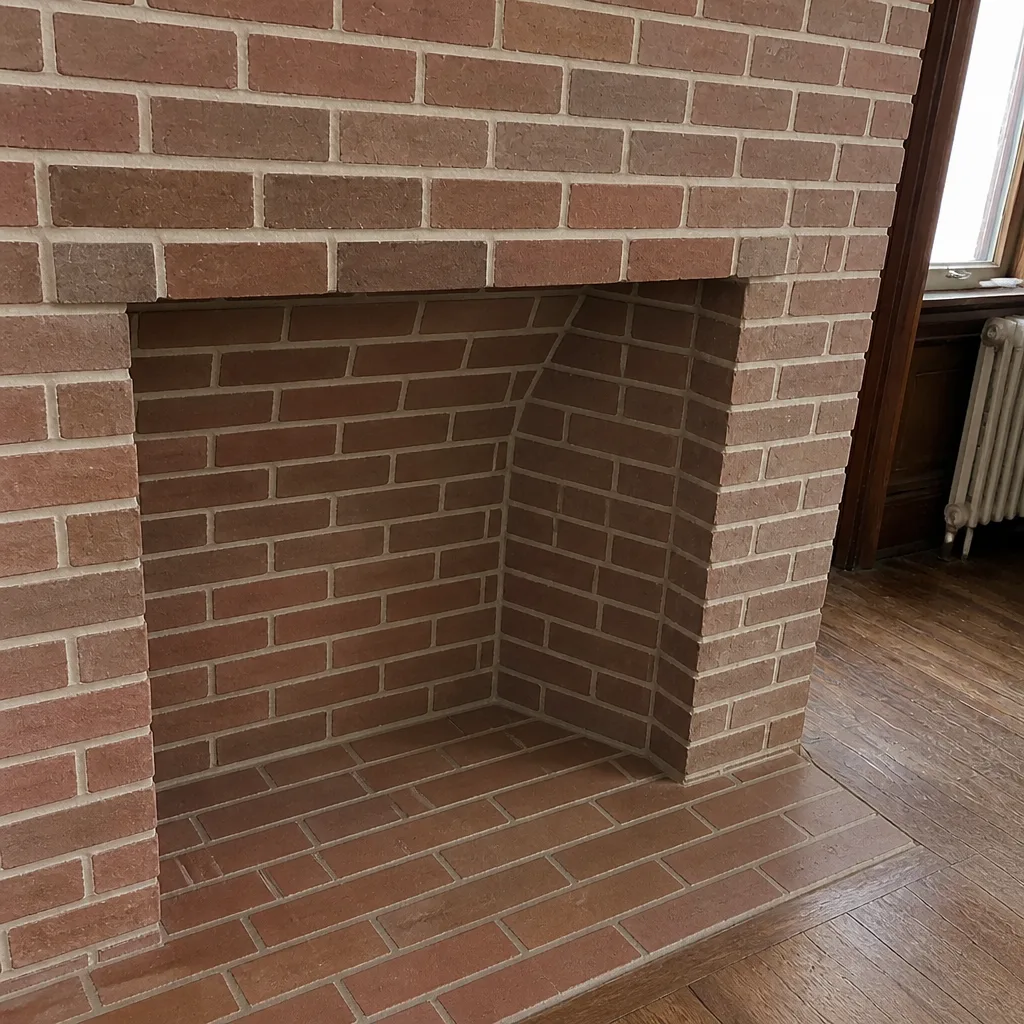
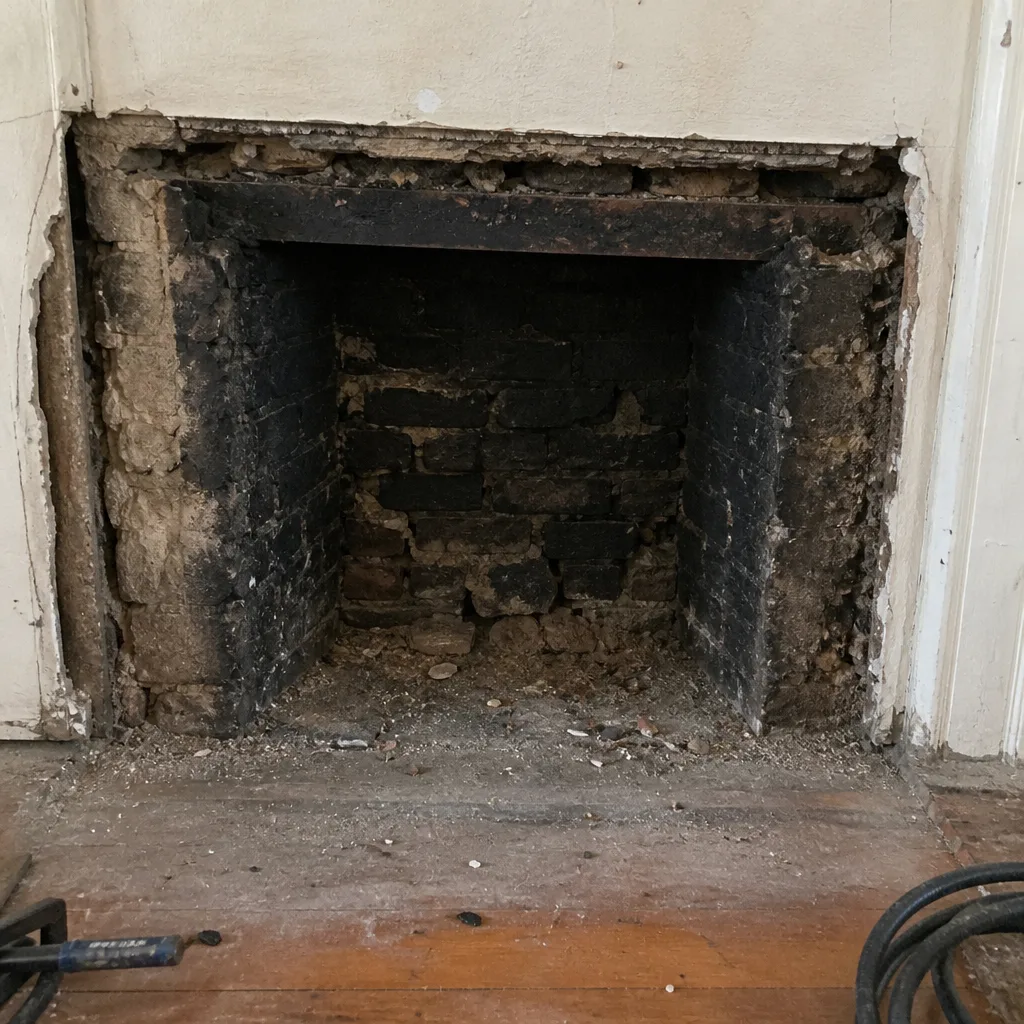
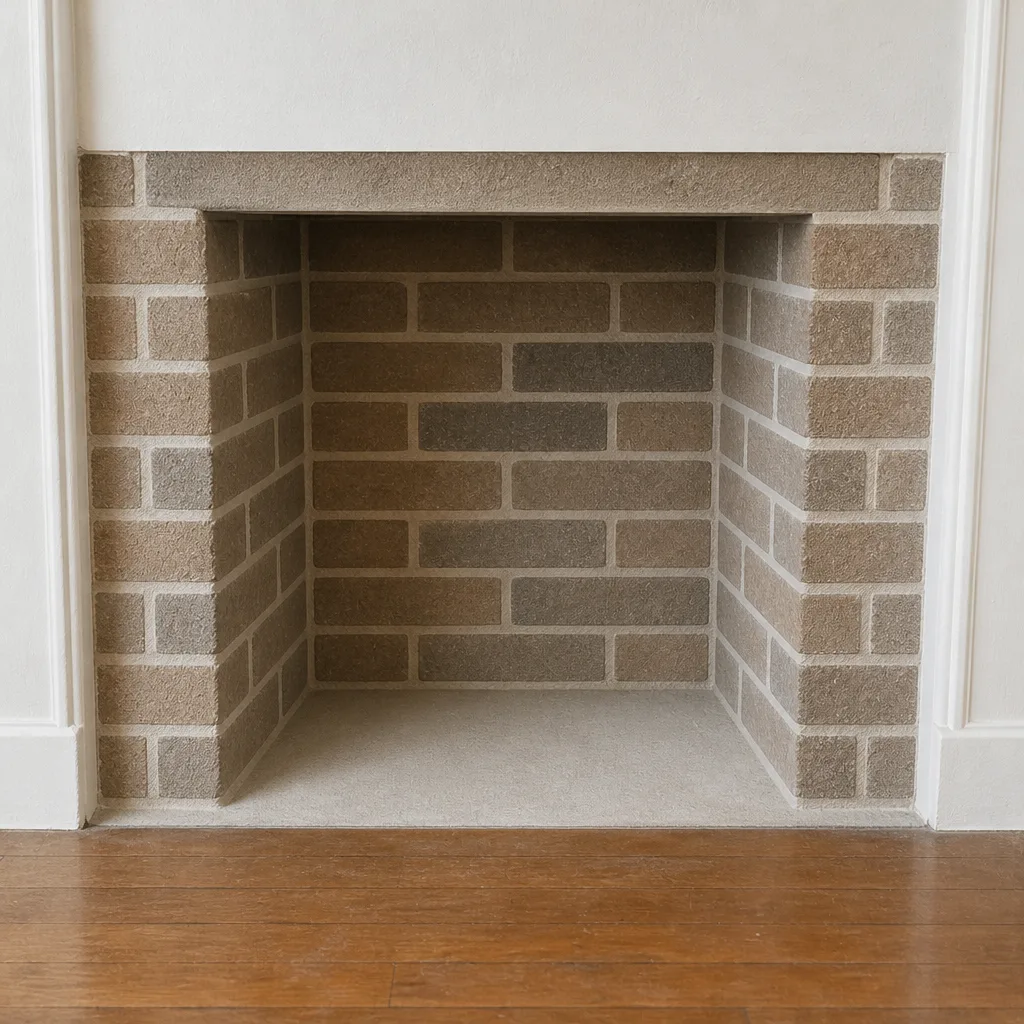
See the difference
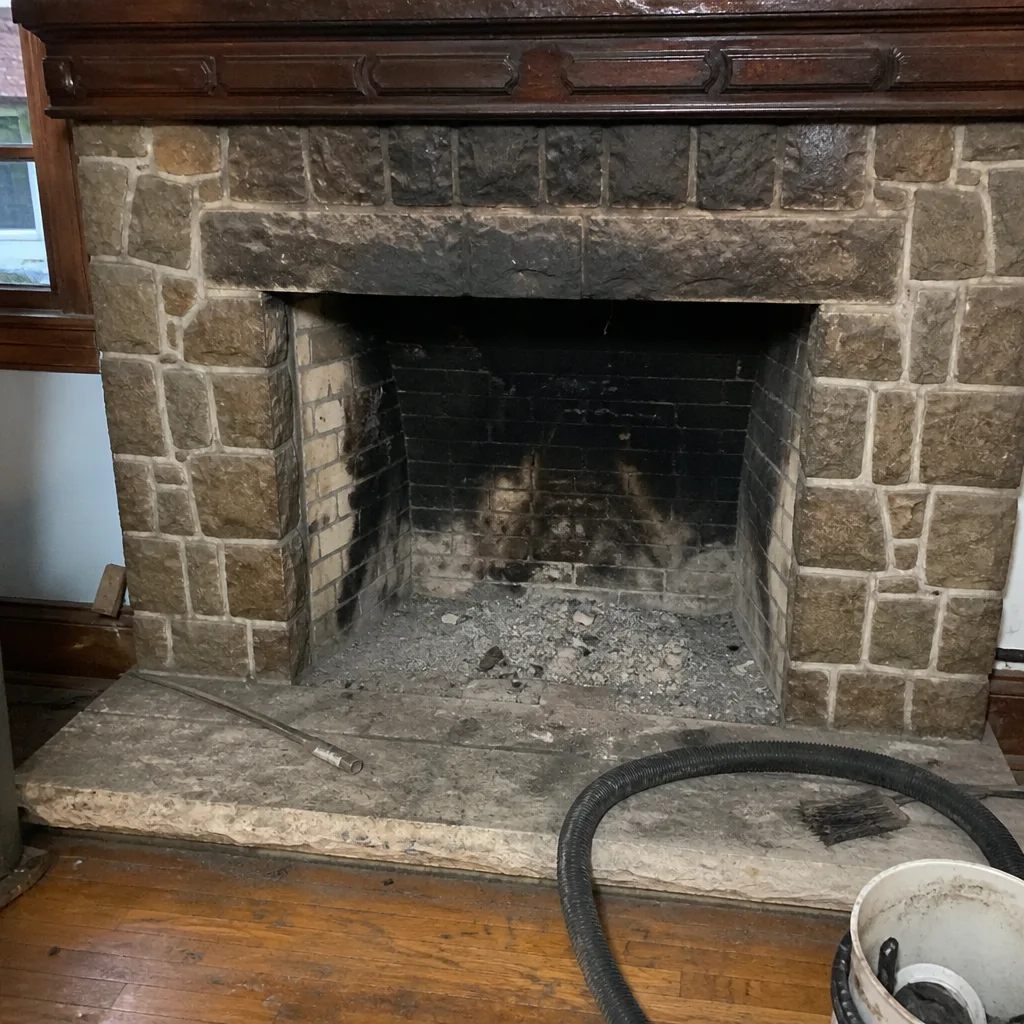 Before
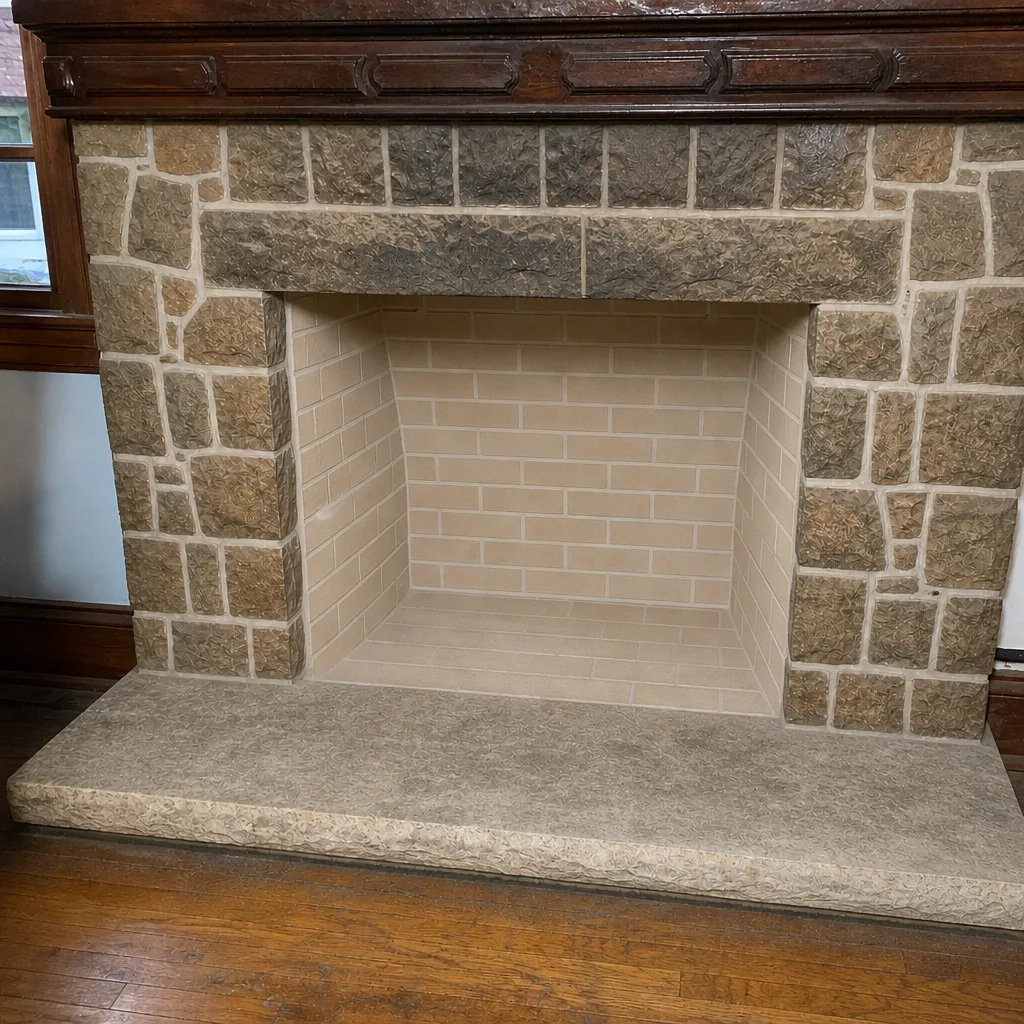 After
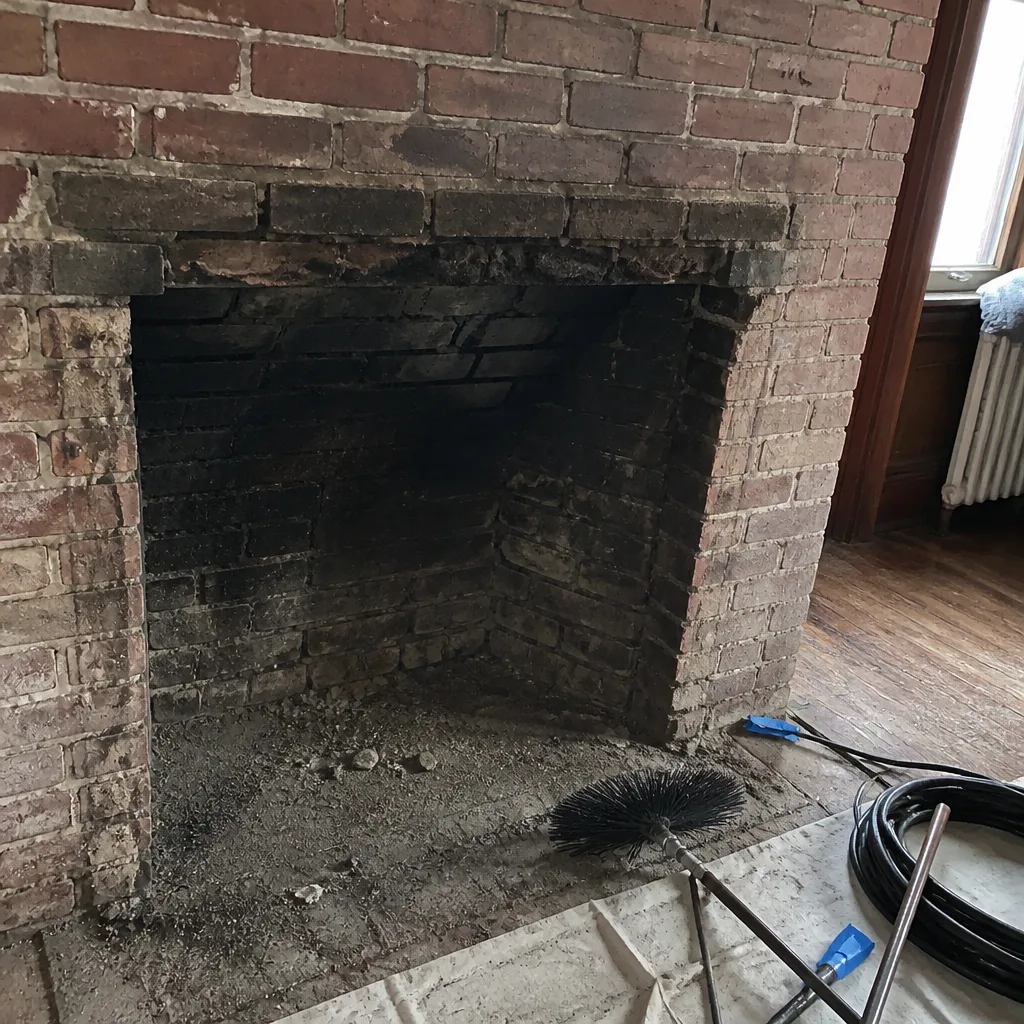 Before
 After
 Before
 After
When to Call a Professional
Some chimney problems are safe to monitor. A few aren’t. Call before your next fire if you’ve had smoke in the room that didn’t resolve when the fire warmed up, if you’ve seen white staining on the bricks or dark streaks on the exterior, if a fire in the flue wouldn’t go out, or if the chimney has been through storm damage. Call before the season starts if the chimney is new to you or the previous owner’s maintenance record is unknown. Call before you light a wood stove in a flue that’s only been tested on an open fireplace. And call if a repair you had done is already failing.
A chimney that catches fire or vents carbon monoxide is a genuine hazard, and carbon monoxide has no smell. Don’t rely on a smoke test or a “it seems fine” judgment for a flue that’s never been inspected. This is the one part of the house where getting it wrong can hurt someone. Chimney Sweep Bushwick offers free estimates in Bushwick. Call (855) 337-1157. We answer 24/7. Fast dispatch from 7am to 7pm, Sunday through Friday.
Frequently Asked Questions
Cracked clay tile liners, moisture intrusion through failed crowns or missing caps, and creosote buildup in undersized flues are the three we see most in Bushwick. Pre-war rowhouse construction makes all three more likely. The right first step is an inspection that identifies which one you actually have.
Intermittent smoke usually points to a cause that depends on conditions: house pressure from a fan, a cold flue, or wind interacting with the stack. A chimney that smokes every time has a blocked or undersized flue. Note when it happens; it narrows the diagnosis quickly.
You can’t confirm a crack without a camera inspection, but you can spot warning signs: white chalky deposits on the liner, a tile joint that’s offset or missing, a smoky smell in warm weather, and staining on the exterior. From the firebox, use a flashlight and a mirror to look for a clear flue channel. If you see anything odd, book an inspection before the next fire.
Smoke in another room is usually a sign of a shared flue or a crack in the masonry that lets smoke escape the flue. In Bushwick’s rowhouses, that’s common in shared walls. Stop using the fireplace and have the system inspected. A camera will show whether the leak is inside the flue or in the brickwork.
No. The crown is at the top of the chimney, and getting to it safely requires working at height, which is a job for a trained professional. A crown repair done badly lets in the water it was supposed to keep out. We repair and replace crowns, and the work is usually less disruptive than homeowners expect.
Not if the flue hasn’t been inspected in the last year, and not if you’ve seen smoke, smell, or staining. A clean flue and a sound liner are the safety baseline. If you’re unsure, call before you light up. Call (855) 337-1157. We answer 24/7. Fast dispatch from 7am to 7pm, Sunday through Friday.
The Bottom Line
Chimney troubleshooting is diagnostic work. Smoke in the room, slow draft, odors, efflorescence, and staining each point to a specific cause, and guessing wastes money. In Bushwick, pre-war rowhouse construction narrows the suspects: shared flues, corbeled offsets, and undersized clay liners fail in predictable ways. Some problems you can monitor. Others need a Level 2 inspection before the next fire. When a fixed problem comes back, stop patching and start diagnosing. And if you’re not sure, call a specialist who can show you what’s going on inside the flue, not just tell you.
Chimney Sweep Bushwick handles the full system, from Chimney Sweep Bushwick through inspection, sweep, cap and crown, and repair. We diagnose before we recommend, every time. Call (855) 337-1157 for a free estimate. We answer 24/7. Fast dispatch from 7am to 7pm, Sunday through Friday.
Written by the team at Chimney Sweep Bushwick.