
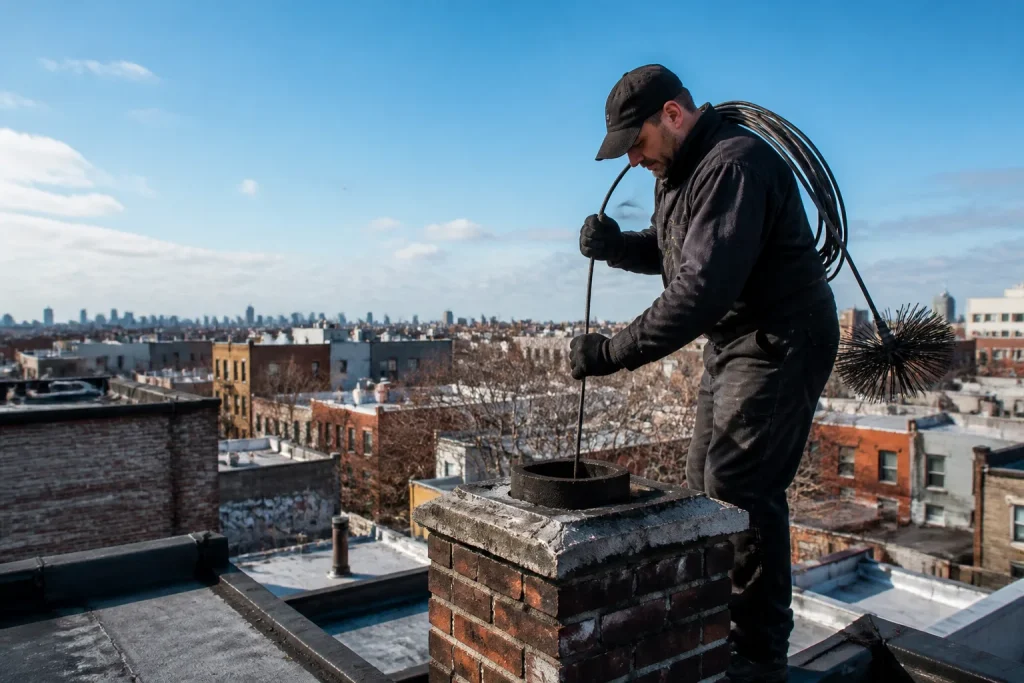
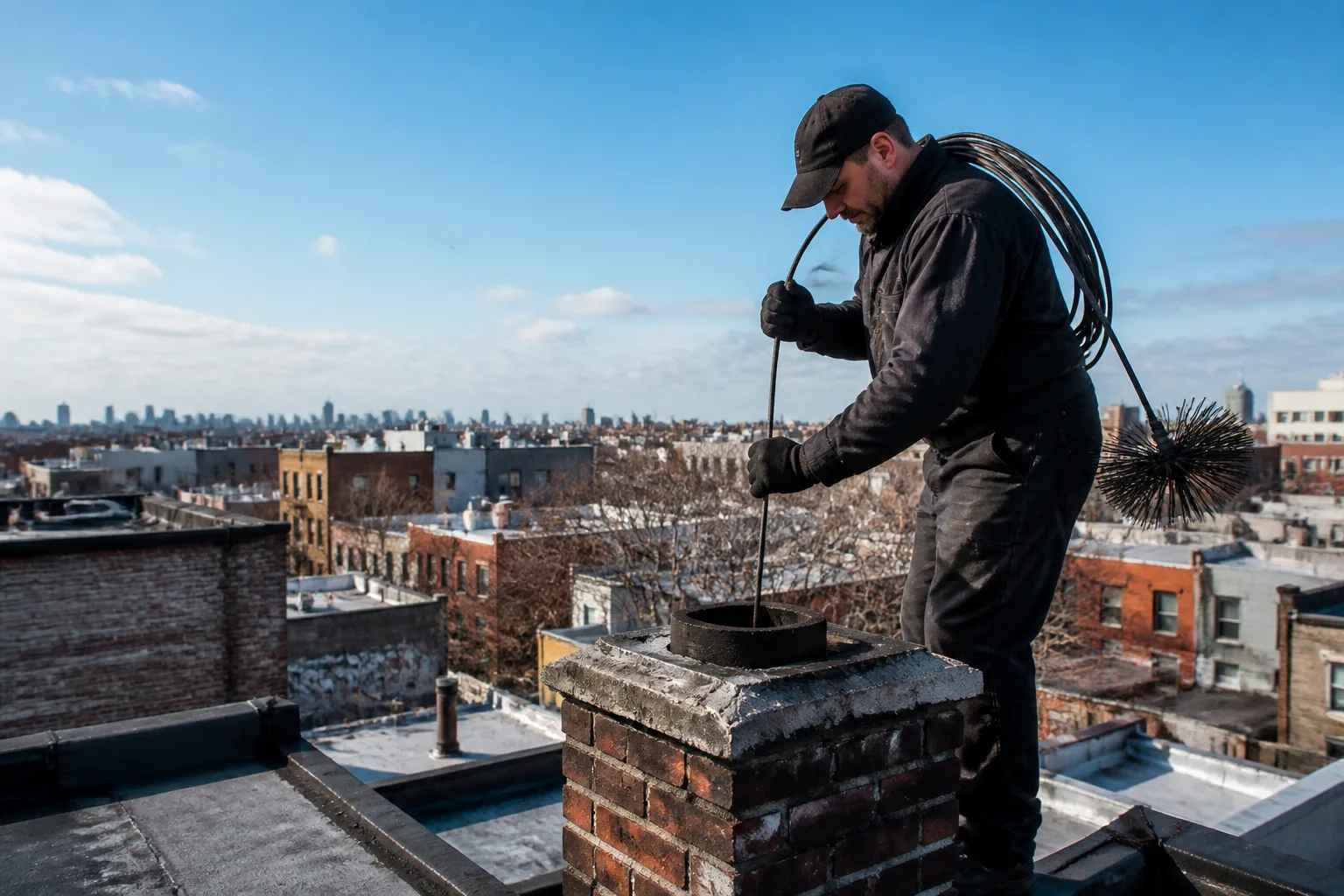
Famco Chimney Sweep in Bushwick: A Homeowner’s Guide
If a technician hands you an invoice with “Famco cap replacement” on it and you don’t know what a Famco cap does, you can’t evaluate whether the recommendation is right for your chimney. That’s the real problem with parts lists: they assume you already know the vocabulary. Famco makes specific chimney components – caps, dampers, and venting products – that show up in Bushwick installations more often than most homeowners realize. This guide translates the parts into plain language so you can have a smarter conversation with whoever is standing on your roof.
What Does Famco Actually Make?
Famco manufactures chimney components, not whole chimneys. Think of the brand as a parts supplier: the individual pieces that sit at the top of your flue, control how much air your fire gets, and vent exhaust safely out of the house. When a sweep mentions a Famco part, they’re usually talking about one of three things: a chimney cap, a damper, or a venting component such as a top plate or flue collar.
A chimney cap is the hooded piece that sits over the flue opening. It keeps rain, snow, birds, and debris out while letting smoke escape. A damper is the metal flap inside the firebox that you open before lighting a fire and close when the chimney is idle. Venting components are the connectors and terminations that route exhaust through the system. Each of these parts plays a different role, and each fails in its own way.
Famco is one of six brands we work with, alongside DuraFlex, HeatShield, Gelco, Olympia Chimney, and Copperfield. That range matters because no single brand makes the best version of every part. A cap decision and a liner decision are different decisions, and sourcing from a recognized portfolio means the part on your chimney was built for chimney work, not adapted from something else.
How Do You Identify the Famco Component on Your Chimney?
You can often tell what’s up there from the ground, and you can confirm it from the roof or a ladder with the right vantage. Start with what’s visible: the shape of the cap, the material it’s made from, and whether it has a mesh screen or an open hood.
- Look at the cap silhouette. Famco caps have distinct profiles – some are single-flue hoods, others are multi-flue designs that cover several flues under one housing. The shape narrows down what you’re looking at.
- Check the material. Stainless steel has a bright, even finish; galvanized steel looks duller and can show a whitish or mottled surface. Paint or powder coating will look uniform until it starts to fail.
- Look for a stamp or tag. Many caps carry a small manufacturer’s mark on the underside or the leg. Be careful: getting close enough to read it means getting close enough to fall.
- Note the damper type from inside. A top-sealing damper looks different from a traditional throat damper. If yours has a gasket and a cable or chain running up the flue, it’s likely a top-sealer.
Here’s the honest part: identifying a part from the roof is a job for someone who does it regularly and has the fall protection to match. If you’re not comfortable on a ladder at height, don’t climb up to satisfy curiosity. A chimney inspection will identify every component on your system and document it for you.
Why Do Famco Caps Fail in Bushwick?
Most cap failures in Bushwick come down to water, freeze-thaw cycles, and the ordinary stress of a dense urban roofscape. Bushwick winters cycle above and below freezing repeatedly, and every one of those cycles works on metal. Water gets into a seam or a scratch, freezes, expands, and opens the gap a little wider. Repeat that across a season and a cap that looked fine in October looks rough by March.
Salt air is the other factor, and it’s worth being precise about what that means. Coastal-adjacent urban environments carry airborne salt that accelerates corrosion on unprotected steel. A cap with a lower-grade coating or a fastener that isn’t rated for the exposure will rust faster here than it would further inland. The failure shows up as flaking paint, rust streaks running down the crown, or a fastener that has corroded to the point of losing grip.
Then there’s the urban-specific wear: squirrels and birds working at mesh screens, debris from nearby trees packing into the screen, and the general vibration of a busy block. A screen that clogs stops venting properly, which changes how the whole system draws. Caps fail from the inside out as often as they fail from weather.
Why Does a Professional Sweep Source Branded Components?
A professional sweep sources from recognized brands because the part has to survive a decade or more on a roof, and unlabeled hardware-store stock usually doesn’t. The cap at the home center was likely built to a price point, with a coating thickness and steel grade chosen to hit a shelf margin. That’s fine for a shed. It’s a poor bet on top of a chimney.
Branded components come with known material grades and, just as importantly, sizing that matches standard flue dimensions. A cap that doesn’t fit properly is worse than no cap at all: it can create gaps that let water in, or restrict the flue opening and change the draft. Famco and Olympia Chimney both make caps and structural components sized to standard flue sizes, which is why they show up in so many Bushwick installations.
There’s a practical benefit too. When a sweep recommends a specific branded part, they can tell you what it’s made of, how it’s sized, and what the warranty covers. A generic part gives you none of that. We’d rather hand a homeowner a part number they can look up than a shrug. If you want the full picture of what a sweep checks on your system, the chimney sweep page covers the process step by step.
What Should You Ask When a Famco Part Is Being Replaced?
Ask four questions, and don’t settle for vague answers on any of them. A technician who knows their materials will answer all four without hesitation.
- “What size flue is this cap sized for?” A cap should match the flue’s actual dimensions, not a rough guess. If the answer is “it’ll fit,” ask for the measurement.
- “What grade of steel is this?” Stainless steel outlasts galvanized in wet, freeze-thaw conditions. If you’re paying for stainless, confirm it.
- “How is it fastened?” Corrosion-resistant fasteners matter in this climate. Ask what’s holding it down.
- “What does the warranty cover, and for how long?” A manufacturer’s warranty and a workmanship warranty are two different things. Ask about both.
None of those questions require technical knowledge. They just require the technician to be specific. A good answer takes thirty seconds; a bad one is a warning. And if you’re unsure whether a replacement is even needed, ask for the photo evidence. An inspection that shows you pictures of the actual condition of your chimney cap & crown before any work is proposed is the standard we hold ourselves to. A cap doesn’t need replacing because it looks old; it needs replacing when the evidence says so.
When Should You Call a Pro?
Call a pro when you see rust streaking down the crown, when a cap is visibly loose or missing, when birds are getting into the flue, or when you can’t remember the last time anyone looked at the system. Call also if you smell smoke in the house when the fireplace isn’t running, or if a fire struggles to draw. Those are signs something in the venting or damper isn’t doing its job, and they’re worth checking before the next fire.
High-tension cables and structural repairs aren’t a homeowner project. If a cap or a crown needs replacement at height, that’s a job for someone with the training and the fall protection. We’d rather you call than climb.
Our technicians have up to 10 years of experience with chimney systems, and we work with DuraFlex liners and HeatShield resurfacing when the diagnosis calls for them. We diagnose before we recommend: inspection first, always, with a camera and a photo report so you can see what we see. From chimney repair to a straightforward sweep, it’s handled by the same specialist crew.
Related services in Bushwick: chimney sweep, chimney cap & crown, chimney repair, and chimney inspection. If you’d rather not climb up to check the cap yourself, call (855) 337-1157.
The Bottom Line
Knowing what a Famco part does changes the conversation. A cap keeps water and animals out; a damper controls airflow; venting components route exhaust safely. When a sweep recommends replacing one of them, you now know what to ask: sizing, material grade, fastening, and warranty. That’s enough to tell a careful recommendation from a parts list being read aloud.
We work with DuraFlex, HeatShield, Gelco, Olympia Chimney, Famco, and Copperfield because professional-grade materials are the difference between a repair that lasts and one that passes inspection and fails two winters later. Built to last, not just to pass inspection. Free estimates across Bushwick, and you’ll see the camera evidence before anything is recommended. If you’re in Bushwick and need help, Chimney Sweep Bushwick offers free estimates – call (855) 337-1157.
We answer 24/7. Fast dispatch from 7am to 7pm, Sunday through Friday.
Frequently Asked Questions
A Famco chimney cap is a manufactured hood that covers the top of your flue to keep rain, snow, debris, and animals out while letting smoke escape. It’s one component in a chimney system, not a whole chimney, and it’s sized to fit standard flue dimensions. If you’re not sure what’s on your chimney, an inspection will identify it. Call (855) 337-1157 for a free estimate.
Signs a cap needs replacing include rust streaks running down the crown, flaking paint or coating, a loose or missing cap, a clogged mesh screen, or birds and debris getting into the flue. Age alone isn’t a reason; condition is. Ask for photo evidence before approving a replacement. Call (855) 337-1157 for a free estimate.
No. You can note the cap’s shape and material from the ground, and a professional inspection will confirm the exact components from the roof with proper fall protection. Climbing a ladder at height to read a manufacturer’s stamp isn’t worth the risk. Call (855) 337-1157 for a free estimate.
Branded components come with known steel grades, correct sizing, and warranty coverage, which matters for a part that has to survive years of freeze-thaw and salt air on a Bushwick roof. Unlabeled stock is built to a shelf price point, not a chimney’s demands. We work with brands like Famco and Olympia Chimney for that reason. Call (855) 337-1157 for a free estimate.
Written by the team at Chimney Sweep Bushwick.
Need Chimney Cleaning Help?
Call Chimney Sweep Bushwick - the local pro we connect you with is licensed and insured, with free written estimates in Bushwick.
(855) 337-1157